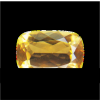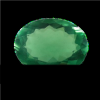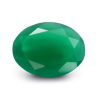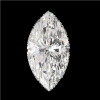
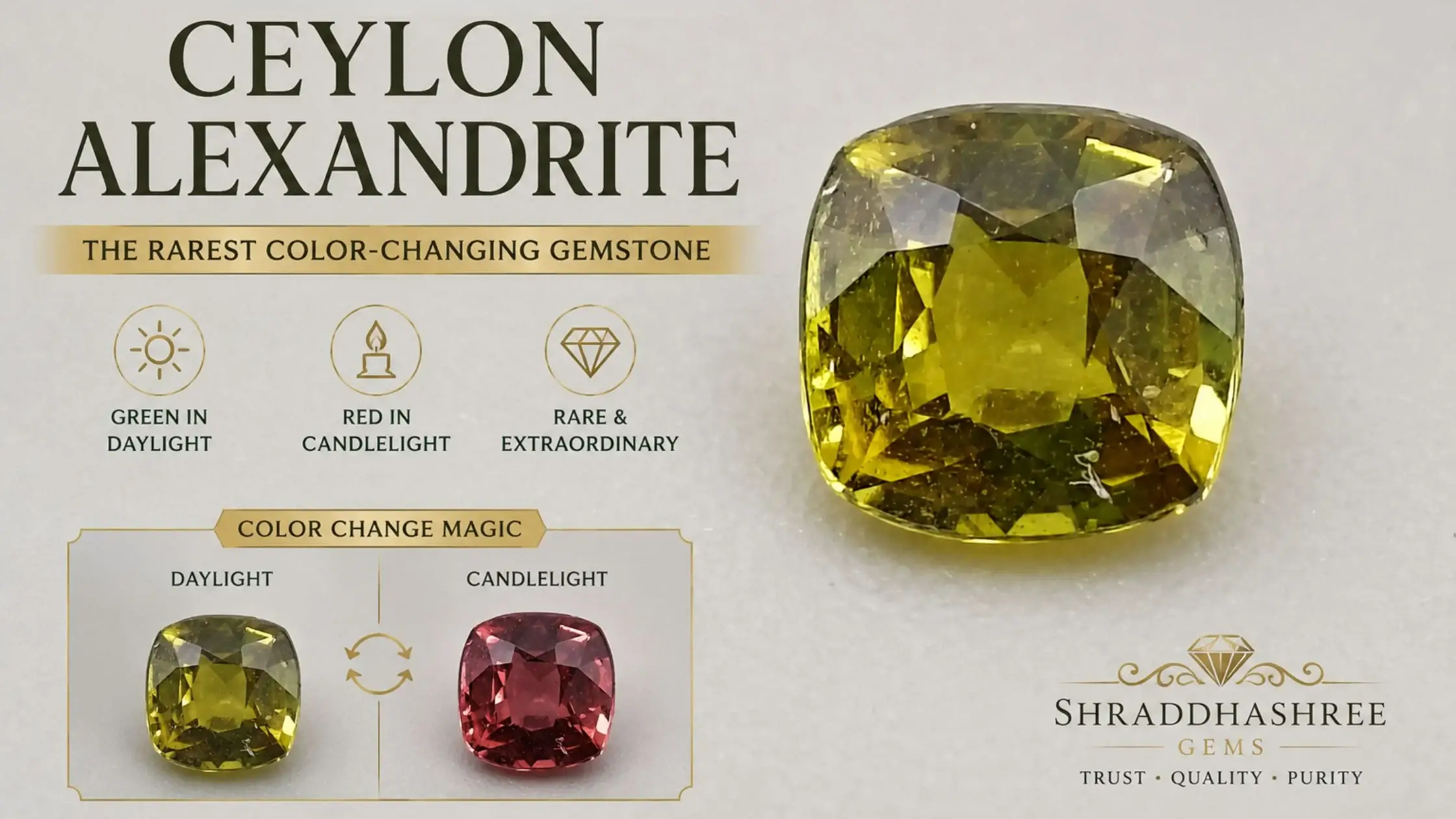
There are gemstones, and then there is Ceylon Alexandrite — a stone so rare, so visually extraordinary, that even seasoned gem collectors describe their first encounter with it as nothing short of breathtaking. Imagine holding a stone that glows forest green under daylight, then transforms to a rich raspberry red the moment you step into candlelight. No trick, no treatment — just pure, geological wonder.
At ShraddhashreeGems, we have always believed that every gemstone tells a story. Alexandrite’s story, especially that of the Ceylon variety, is one of the most compelling in the world of fine gems. This guide takes you deep into what makes Ceylon Alexandrite so sought after, how to identify genuine stones, what to look for when buying, and why this gem continues to captivate royalty, collectors, and astrology enthusiasts alike.
What Is Alexandrite? A Brief Introduction
Alexandrite is a variety of the mineral chrysoberyl (BeAl₂O₄) — but not just any chrysoberyl. What sets it apart is its extraordinary ability to change color under different light sources, a property known as pleochroism combined with selective light absorption. The gem contains trace amounts of chromium, which absorbs certain wavelengths of light differently depending on the light source, causing the dramatic color shift the stone is famous for.
The finer the color change — from a vivid green or teal in daylight to a strong purplish-red or raspberry in incandescent light — the more valuable the stone. A weak or muddy color shift significantly reduces a stone’s desirability and price.
The Origin Story: Why Ceylon Alexandrite Is Special
While Alexandrite was first discovered in Russia’s Ural Mountains in the 1830s, Sri Lanka (formerly Ceylon) has long been one of the most respected and consistent sources of natural Alexandrite in the world. In fact, when Russian deposits were largely exhausted by the late 19th century, Ceylon emerged as a primary alternative — producing stones of remarkable clarity, size, and color shift that rivaled the best Ural specimens.
Ceylon Alexandrite is mined from alluvial gem gravels — primarily in the Ratnapura district, famously known as the “City of Gems.” The gemstone-rich deposits here have been worked for over 2,000 years, and the geological conditions — ancient metamorphic rock formations — are perfectly suited to producing high-quality chrysoberyl, including Alexandrite.
What distinguishes Ceylon Alexandrite from stones of other origins?
- Larger crystal sizes — Ceylon deposits tend to yield bigger rough, which means more sizeable faceted stones compared to Brazilian or Russian material.
- Superior clarity — Sri Lankan Alexandrites often have fewer inclusions, offering cleaner, more transparent stones.
- Subtle but distinguished color palette — Ceylon stones often show a blue-green to greenish-teal in daylight and a soft purplish-red or brownish-red in artificial light. While some prefer the stronger green-to-red shift of fine Brazilian stones, Ceylon’s color shift has an elegance and subtlety that many connoisseurs deeply appreciate.
- Historical prestige — Ceylon has been a source of precious gems for millennia. Its gemstones carry a pedigree that few origins can match.
The Color-Change Phenomenon: Nature’s Most Magical Trick
The magic of Alexandrite lies in chromium’s selective absorption of light. Under broad-spectrum daylight or fluorescent lighting (which is rich in blue-green wavelengths), the gem appears green. Under incandescent or candlelight (which is richer in red wavelengths), the same gem shifts to red or purplish-red.
The quality of this color change is graded on a scale that gem professionals often describe as:
- Weak — A slight, barely noticeable shift
- Moderate — Visible change but not dramatic
- Strong — Clear and distinct color shift
- Excellent/Complete — A dramatic, vivid transformation from one hue to another
For Ceylon Alexandrite, the color shift is typically described as moderate to strong, with a characteristic blue-green or teal primary color that gives it a unique personality compared to the more saturated greens found in Brazilian material.
Alexandrite in Vedic Astrology: A Gem of Mercury
In Jyotish (Vedic astrology), Alexandrite holds a significant place as an alternative or upratna (substitute gemstone) for Emerald (Panna), which is the primary gem for the planet Mercury (Budha). Mercury governs intelligence, communication, business acumen, analytical ability, and wit.
Wearing a natural Ceylon Alexandrite is believed to:
- Sharpen mental clarity and focus
- Enhance communication skills and persuasion
- Bring financial acumen and success in trade or business
- Support nervous system health and reduce anxiety
- Attract good fortune and positive changes in life
Given its color-changing nature, Alexandrite is also sometimes associated with adaptability and balance — a stone that “meets you where the light is,” so to speak. Vedic practitioners particularly favor natural, untreated Ceylon Alexandrite for astrological purposes, as the stone’s energetic properties are considered most potent in its natural state.
How to Identify Genuine Ceylon Alexandrite
With Alexandrite’s high value, the market has no shortage of imitations and synthetics. Here is what you need to know to protect yourself:

Natural vs. Synthetic Alexandrite
Synthetic Alexandrite — lab-grown using the Czochralski or flux method — has been commercially produced since the 1960s. Synthetic stones exhibit the same optical properties as natural ones and often show an even stronger color change. However, they hold very little value compared to natural stones.
Key differences:
- Natural stones typically have inclusions visible under magnification — fingerprints, needle-like rutile inclusions, growth zoning, or liquid inclusions.
- Synthetic stones often appear too clean or may show curved growth striations under a loupe (particularly flux-grown synthetics).
- A certified gemological lab report from GIA, GRS, Gübelin, or SSEF is the gold standard for confirming natural origin and identifying Ceylon provenance.
Color-Change vs. Simulants
Cheaper color-change garnets, synthetic corundum, and even glass are sometimes sold as “Alexandrite.” A genuine Alexandrite’s color change is specific: green/teal to red/purplish-red. Color-change garnets, for example, often shift from a grayish-purple to a more reddish-purple — a noticeably different range.
At ShraddhashreeGems, every Ceylon Alexandrite we offer comes with a full gemological report verifying natural origin, treatment status, and where possible, geographic origin — so you can buy with complete confidence.
The 4Cs of Alexandrite: What Determines Value
1. Color Change (Most Important)
The strength and completeness of the color shift is the single most important value factor. Strong, vivid shifts — especially those that go from a pure green to a pure red — command significant premiums. Ceylon Alexandrites showing a clean teal-to-red transformation are among the most prized.
2. Clarity
Unlike emeralds (where inclusions are widely accepted), Alexandrite buyers generally expect good clarity. Eye-clean stones — those free of inclusions visible to the naked eye — are more valuable. Ceylon material is known for producing cleaner stones.
3. Cut
Alexandrite is typically cut to maximize both the face-up color and the intensity of the color change. Oval, cushion, and round cuts are most common. The cut should allow light to pass cleanly through the stone in both lighting conditions.
4. Carat Weight
Natural Alexandrite of any significant size is incredibly rare. Stones over 1 carat with strong color change are considered exceptional. Fine Ceylon Alexandrite above 2 carats with excellent color shift is among the rarest and most valuable gemstones on earth — often exceeding the price of ruby and sapphire of similar quality.
Caring for Your Ceylon Alexandrite
Alexandrite is a durable gemstone with a hardness of 8.5 on the Mohs scale, making it suitable for everyday wear in rings, pendants, and earrings. However, like all precious gems, it deserves proper care:
- Cleaning: Use warm soapy water and a soft brush. Avoid ultrasonic cleaners if the stone has significant inclusions.
- Storage: Store separately to prevent scratching from harder materials or contact with other gems.
- Avoid harsh chemicals: Exposure to bleach, acids, or abrasive cleaners can dull the surface or damage settings.
- Regular inspection: Have your jeweler check prongs and settings annually, especially for rings in daily use.
Why Buy Ceylon Alexandrite from ShraddhashreeGems?
At ShraddhashreeGems, we source our Ceylon Alexandrites directly from trusted contacts in Sri Lanka’s Ratnapura gemstone belt — the epicenter of the island’s gem trade. Every stone we carry is:
✔ 100% natural and untreated (or clearly disclosed if treated)
✔ Certified by recognized gemological laboratories
✔ Ethically sourced with full traceability
✔ Accompanied by expert guidance on astrological suitability and setting options
We understand that buying a rare gemstone like Alexandrite is not just a purchase — it is an investment, a personal statement, and often a deeply meaningful choice. Our team is here to guide you through every step.
Final Thoughts: A Gemstone Worth Seeking
Ceylon Alexandrite is not merely a gemstone — it is a geological phenomenon, a piece of living color that changes with the world around it. In a market flooded with treated, synthetic, and misrepresented stones, a genuine, certified Ceylon Alexandrite stands apart as one of nature’s true marvels.
Whether you are a collector adding to a prized collection, an astrology believer seeking Mercury’s blessings, or simply someone who wants to own something truly extraordinary — Ceylon Alexandrite deserves your attention.
Explore our curated collection of natural Ceylon Alexandrite at ShraddhashreeGems and discover a stone that is as rare as it is remarkable.